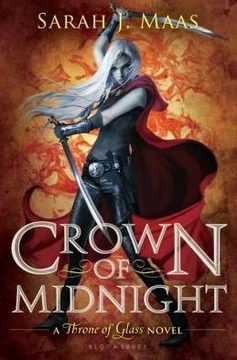
The Veil
A living membrane of grief and power, the Veil decides who walks between the world of the living and the world of the dead.

In the world of Throne of Glass, the Veil is the shimmering, living boundary that separates the physical realm from the Thornwood—the vast spirit world where the dead, the ancestral, and the deeply magical reside. It is not a council of humans or a political body, but a metaphysical membrane woven from centuries of accumulated magic, grief, and will. Every character who walks between worlds—assassin, king, or spirit—must pass through or part the Veil, and its integrity shapes the fate of every kingdom on the physical side.
The Veil functions as both a barrier and a bridge. When it thins, spirits bleed into the waking world and the Thornwood's ancient powers surge unchecked. When it hardens, the dead are locked away and the living lose access to the deeper wells of magic that the spirit realm provides. Its state is inextricable from the political and magical conflicts that drive the series, making it as much a character as any person on the page.
- Type
- Metaphysical boundary / world-element
- Connects
- Physical realm ↔ Thornwood (spirit world)
- First becomes significant
- Throne of Glass (Book 1)
- Key characters who interact with it
- Aelin Galathynius, Chaol Westfall, Ryla, the Thornwood spirits
- Nature
- Living magical membrane, responsive to will and power
- Status across series
- Fluctuates—thins, tears, and reforms as the plot demands
Lore & Background
The Veil in the Throne of Glass cosmology is not a static wall but a breathing, responsive threshold. It is threaded with the residual magic of every soul that has ever crossed it, and it carries the weight of the Thornwood's ancient will. In the early books, characters treat crossing the Veil as a rare, dangerous act—something that requires extraordinary power or a desperate act of love. Aelin's repeated crossings, her ability to draw power from the Thornwood, and the way the Veil reacts to her emotional state all signal that the boundary is not merely geographic but deeply personal, shaped by the will of those who press against it.
As the series progresses, the Veil's fragility becomes a central source of tension. When it tears or thins, the consequences ripple outward: spirits manifest in the physical world, the magic of kingdoms destabilizes, and the old pacts between the living and the dead are called into question. The Veil thus serves as a narrative barometer—its condition mirrors the health of the world's political and spiritual order. The kingdoms of Shora, Dorian, and Ilium all exist in a state of uneasy equilibrium with the spirit realm, and the Veil is the contract that holds that equilibrium in place.
What makes the Veil distinct from a simple magical barrier is its responsiveness to intention. It is not simply a wall to be broken; it bends, parts, and reforms in reaction to the will, grief, and love of those who approach it. This makes it a mirror of the characters' inner states and a literal expression of the series' central theme: that power is inseparable from emotion, and that the boundary between life and death is ultimately a matter of choice.
In Their Own Story
The air tasted of iron and old rain. Aelin pressed her palms flat against the ground and felt the Thornwood stir beneath her—vast, slow, patient as a sleeping god. The Veil was there, just below the surface of the world, a gossamer curtain of pale gold light that rippled where her fingers touched the earth. She could feel it pulling at her, the way a tide pulls at a stone, asking her to step through, to leave the noise and the pain and the weight of a crown she had never wanted.
Behind her, the campfire crackled. Chaol's voice, low and careful, called her name. She did not turn. The Veil was thinning again—she could see, just at the edge of perception, the silhouettes of things that had not walked the living world in a thousand years. They were not hostile. They were waiting. They had always been waiting, on the other side of the membrane, for someone to tear it wide enough to let them through.
She withdrew her hands. The gold light faded. The Thornwood settled back into its long, silent sleep. But the pull remained, a faint ache behind her sternum, a reminder that the boundary was not a door that could be locked forever. It was a breath. And breath, by its nature, must eventually turn.
Reader's Guide
The Veil is not a faction in the conventional sense—it has no elected leaders, no ranks, no meeting halls. It is a living magical boundary, and its 'hierarchy' is better understood as a spectrum of interaction. At the most basic level, it simply exists: a threshold between the physical world and the Thornwood. Characters with sufficient power or emotional resonance can part it, cross it, or damage it. Aelin's repeated crossings and her ability to draw Thornwood magic place her at the apex of those who interact with the Veil most directly. Chaol, Ryla, and other characters who have walked the spirit world have a secondary, more limited relationship with it.
The Veil's 'goals' are not its own but are shaped by the forces that press against it. The Thornwood's ancient will, the ambitions of living kings, and the personal griefs of individual characters all strain the boundary in different directions. Internal 'conflict' within the Veil manifests as thinning, tearing, or surging—states that correspond to the broader political and magical crises of the series.
Its relationship to other factions is foundational. The Assassin's Guild operates in the physical world but its members' power is shaped by the magic that flows through the Veil. The Thornwood spirits exist on the other side and their ability to influence the living world depends entirely on the Veil's permeability. The kingdoms of Shora, Dorian, and Ilium all exist in a state of uneasy equilibrium with the spirit realm, and the Veil is the contract that holds that equilibrium in place.
Across the series, the Veil evolves from a distant, almost abstract barrier into an active, volatile force. Its condition tracks the escalation of the plot: as the stakes rise, the boundary weakens, and the consequences of its instability become the driving force of the final conflicts.
Did You Know?
- The Veil is not a fixed wall but a responsive membrane—its permeability shifts based on the emotional and magical state of those who press against it, making it as much a reflection of character as a feature of geography
- Crossing the Veil into the Thornwood is depicted as one of the most dangerous acts in the series, requiring extraordinary power or a desperate act of will, and the physical toll on the crosser is significant.
- The Thornwood, the spirit world on the other side of the Veil, is not simply a 'land of the dead' but a living realm with its own ancient will, inhabitants, and magic that can bleed into the physical world when the Veil
- Aelin's repeated and increasingly powerful crossings of the Veil serve as a narrative barometer for the series' escalation—her growing ability to interact with the boundary mirrors the widening gap between the physical a
More in Factions & Groups
Elsewhere in the Throne of Glass universe
Spotted an error? Know more?
This is a living reference — every entry is fact-audited, and reader corrections feed straight into our audit queue. Suggest an edit · See this site's audit record