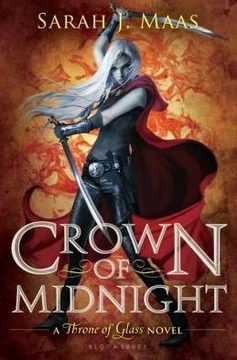
The Mark of the Dark Lord
A brand of shadow that writes the price of power into living flesh.

The Mark of the Dark Lord is a physical and metaphysical brand associated with the Old God—the imprisoned entity whose power undergirds all dark magic in the world of the Shirelands and beyond. It manifests as a visible sign on the bearer's flesh, a tether that binds them to the source of shadow and ruin, and it serves as both a weapon and a curse. In the broader narrative, the mark represents the inescapable cost of drawing on power that was never meant for mortal hands: the more one channels it, the more the mark deepens, and the more the bearer's autonomy erodes.
For the characters of the Throne of Glass saga, the mark is not merely a plot device but a recurring symbol of the tension between power and personhood. It haunts those who seek to harness the Old God's influence, reminding them—and the reader—that every act of dark magic exacts a price written in the body itself.
- Type
- Curse / Physical manifestation of dark power
- Source
- The Old God (imprisoned entity, wellspring of dark magic)
- Affiliation
- Dark magic; the Old God's influence
- Bearer(s)
- Those who channel or are claimed by the Old God's power
- Visibility
- Appears on the bearer's skin; deepens with use
- Status
- Active and recurring across the series
Lore & Background
In the cosmology of the Throne of Glass, the Old God is not a deity in the traditional sense but a primordial force of entropy and shadow, sealed away in a prison of glass by the ancient gods. Its power, however, did not vanish. It seeps into the world through cracks, through bloodlines, through the desperate prayers of those who need strength beyond what the light can give. The Mark of the Dark Lord is the physical signature of that seepage made personal: when a person draws too deeply on the Old God's reservoir, the mark blooms across their skin like ink spreading through water, a darkening that cannot be washed away or healed by ordinary means.
The mark is not merely cosmetic. It functions as a conduit, a living channel through which the Old God's will can whisper, tempt, and ultimately claim. Bearers report a coldness in the marrow, a hunger that ordinary food cannot satisfy, and a growing indifference to the suffering of others. In the most extreme cases, the mark consumes the bearer entirely, leaving behind a hollow vessel that speaks with a voice not its own. This is the narrative's cautionary core: power borrowed from the dark does not return, and the debt is paid in the self.
Across the series, the mark complicates every alliance and every act of heroism. A warrior who bears it is simultaneously the most dangerous blade in the room and the most fragile person in it, because the line between wielding the power and being wielded by it grows thinner with every use. The mark thus becomes a lens through which the series examines consent, corruption, and the question of whether a person can remain themselves after touching the abyss.
In Their Own Story
The candle had guttered out an hour ago, but she could still see the mark. In the dark it was worse—she could feel it breathing beneath the skin of her forearm, a slow pulse of cold that had nothing to do with the winter draft seeping through the shutters. She pressed her thumb against the blackened tendril that coiled around her wrist, and for a moment the whisper in the back of her skull went still. Then it returned, patient as tide, murmuring a name she did not recognize and a promise she did not want to keep.
She flexed her fingers. The mark dimmed, satisfied, as though it had been fed just enough to sleep. She would not sleep. She would not let it sleep. But the cold in her marrow had shifted, settled deeper, and she knew with the quiet certainty of a woman who has made this bargain before that tomorrow the mark would reach a little further up the arm, and the voice would be a little less like a whisper and a little more like a command.
She blew out the last ember in the hearth and sat in the dark, listening to the mark breathe, and tried to remember what it felt like to be only hers.
Reader's Guide
The Mark of the Dark Lord is not a crafted artifact but a living curse—a biological and metaphysical brand that appears on the flesh of those who channel the Old God's power. It is innate to the act of drawing on dark magic rather than something that can be forged, purchased, or transferred by simple touch. Once it takes hold, it is permanent for the bearer; no known healing, alchemical remedy, or priestly rite in the series has been shown to remove it entirely.
Mechanically, the mark functions as a two-way conduit. The bearer gains access to the Old God's reservoir of shadow, ruin, and entropy—powers that manifest as overwhelming physical force, the ability to unmake structures, and a kind of predatory awareness. In return, the mark deepens with each use, spreading across the body and eroding the bearer's emotional autonomy. The Old God's will seeps through the channel, and the bearer's own desires become harder to distinguish from the entity's.
Limitations are significant. The mark cannot be wielded by someone who has not already drawn on the Old God's power; it is a consequence, not a tool one can simply pick up. Bearers experience physical cold, a hunger that defies normal sustenance, and progressive desensitization to the pain and suffering of others. In the most extreme depictions, the mark fully consumes the bearer, leaving a vessel that acts with the Old God's intent.
Narratively, the mark distinguishes itself from other powers in the series (such as the light-based magic of the gods or the political magic of the throne) precisely because it is a debt rather than a gift. It cannot be revoked by the bearer, it cannot be shared, and it grows. Its significance lies in making the cost of dark power literal, visible, and inescapable—a scar the world can see on anyone who has reached into the abyss.
Did You Know?
- The mark is a consequence of using the Old God's power rather than a pre-existing tool; it appears as a result, not a prerequisite, meaning a character cannot simply choose to activate it at will without already having d
- In the series' cosmology, the Old God is sealed in a prison of glass by the ancient gods, yet its power continues to leak into the world—making the mark a symptom of that ongoing, unresolved containment rather than a one
- The mark's progression is tied to frequency of use: characters who rely on it sparingly retain more autonomy than those who lean on it repeatedly, making the narrative tension a question of how often the bearer reaches f
- The mark is visible to others, which turns every bearer into a walking declaration of their choice—and their vulnerability—making it a source of both fear and fascination in the political and social dynamics of the serie
More in Powers & Artifacts
Elsewhere in the Throne of Glass universe
Spotted an error? Know more?
This is a living reference — every entry is fact-audited, and reader corrections feed straight into our audit queue. Suggest an edit · See this site's audit record